
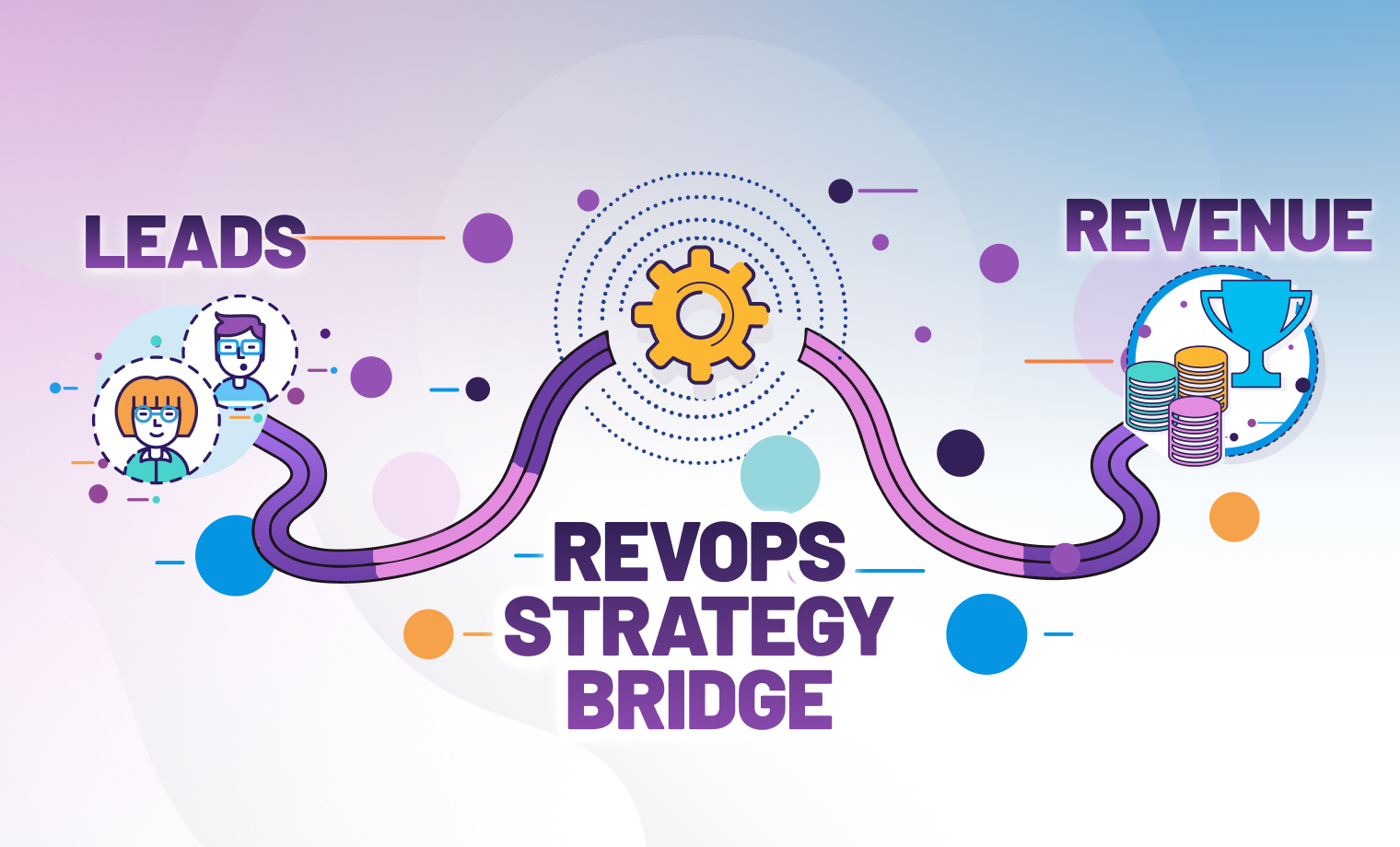


Why a RevOps Strategy Matters to Modern B2B Marketing
A strong RevOps strategy transforms marketing into a predictable, repeatable revenue function. We’ve seen some of our clients begin to embrace this shift in strategy. Revenue operations marketing can now manage data, processes, and technology, shifting marketing from activity-driven to revenue-focused.
The RevOps Impact on Marketing
Marketing planning becomes more strategic and agile when it’s based on revenue metrics like lead forecasts and conversion rates. By using these insights, we’ve found that our clients’ teams can better prioritize resources based on customer profiles and sales capacity. Revenue forecasting and funnel conversion analysis are core components of an effective RevOps strategy, which can help you prioritize high-impact programs. Are you tracking these KPIs? Or are you attacking marketing with a variety of tactics–minus the strategy?
Here are four additional strengths highlighted in a RevOps strategy.
1. Branding & Messaging Consistency
In a revenue operations marketing model, shared personas and cross-functional messaging help streamline communications across teams. BFT suggests that everyone works from the same playbook. You get:
- Audience personas that both marketing and sales can use
- Consistent messaging across all touchpoints
- Regular feedback to enhance positioning and storytelling
- Better ways to measure brand impact using attribution and intent data
2. Tighter Campaigns
These workflows are central to revenue operations marketing, where standardized briefs and automated handoffs improve speed and accuracy. Here’s where it all comes together. Other campaign perks include:
- Campaign briefs with profiles, stages, CTAs, and KPIs
- Clear funnel stages to guide awareness, capture, and acceleration efforts
- Automated scoring, routing, sequencing, and follow-up
- Testing methods to enhance messaging, creative, and touchpoints
3. Stronger Content Strategy
A mature RevOps strategy provides the data foundation needed to understand how each asset influences pipeline and revenue. These are recyclable content pieces, individually tailored to the channel delivery. Using data here gives you:
- Content mapped to pain points and lifecycle stages
- Data that shows which assets influence pipeline and revenue
- Content delivered to sellers when they need it
- A clear content ops system for tagging, metadata, taxonomy, and measurement
4. Greater Digital Optimization
Today’s revenue operations marketing depends on unified tracking to ensure that digital investments directly tie to business outcomes. Use dashboards to see what the numbers tell you. Your tech stack can help you:
- Build a tracking method to track performance across channels
- Improve website conversions using real-time feedback
- Manage demand capture activities tied to your CRM
- Monitor reviews, social proof, and buyer intent signals to manage brand reputation
What Marketers Gain by Embracing RevOps
With a strong RevOps strategy, your marketing team can operate with more accountability, clearer forecasting, and better alignment. That’s what we all want!
RevOps is a strategic advantage for you.
As your business model matures, adopting a clear RevOps strategy becomes key to accelerating growth. Companies investing in revenue operations marketing can align teams, optimize performance, and build a connected buyer journey. Together, these improvements showcase why revenue operations marketing is important for B2B organizations pursuing scalable, predictable growth.
Reach out for BFT’s help to better connect your sales and marketing.
